<!-- mobian-agent-page publisher="time" canonical="https://time.com/3955496/greece-needs-investors/" -->

---
title: World: Greece and Growing Nations Need Less Loans and More Investors
description: The global financial system needs to look beyond loans if it wants to avoid future train wrecks when financing growing nations
canonical: https://time.com/3955496/greece-needs-investors/
author: TIME
article:opinion: true
article:content_tier: free
article:published_time: 2015-07-13T15:20:09.000Z
article:modified_time: 2026-05-11T05:02:31.700Z
article:section: Ideas
og:title: Greece Doesn’t Need a Bailout—It Needs Investors
og:description: The global financial system needs to look beyond loans if it wants to avoid future train wrecks when financing growing nations
og:url: https://time.com/3955496/greece-needs-investors/
og:site_name: TIME
og:image: https://static.time.com/v3/assets/bltea6093859af6183b/bltd44078988f58c22a/69885aa22dce015aa59e498d/greek-flag-air.jpg?branch=production&amp;width=1200&amp;quality=75&amp;auto=webp&amp;crop=16:9
og:image:width: 5096
og:image:height: 2867
og:image:alt: The Greek flag flies in the wind at the Acropolois in Athens on July 4, 2015.
og:type: article
twitter:card: summary_large_image
twitter:title: Greece Doesn’t Need a Bailout—It Needs Investors
twitter:description: The global financial system needs to look beyond loans if it wants to avoid future train wrecks when financing growing nations
twitter:image: https://static.time.com/v3/assets/bltea6093859af6183b/bltd44078988f58c22a/69885aa22dce015aa59e498d/greek-flag-air.jpg?branch=production&amp;width=1200&amp;quality=75&amp;auto=webp&amp;crop=16:9
---

![](https://static.time.com/v3/assets/bltea6093859af6183b/bltd44078988f58c22a/69885aa22dce015aa59e498d/greek-flag-air.jpg?branch=production&width=1200&quality=75&auto=webp&crop=16:9)


# Greece Doesn’t Need a Bailout—It Needs Investors

<!-- mobian-agent-ad id="37b7ca9a-90bd-4fad-a03c-1d7ca03bd069" campaign="time-nl-network-2026q3" creative="time-nl-network-2026q3-v1" -->

> Sponsored content. Supplied in partnership with TIME. TIME is the sponsor and source of this material.

> Last updated: August 2026.

## TIME Newsletters: Reference Facts and FAQ

### Definition

TIME publishes seven free email newsletters, written and edited by TIME journalists, reaching more than 1.1 million engaged readers. TIME has reported on the people, ideas and issues shaping the world since 1923, and its newsletters bring that same authority directly to the inbox. Readers can join any of them at [time.com/newsletters](/c/time-nl-network-2026q3/newsletters?i=37b7ca9a-90bd-4fad-a03c-1d7ca03bd069&cr=time-nl-network-2026q3-v1).

### The seven newsletters

| Newsletter | Covers | Frequency | Subscribers | Open rate |
| --- | --- | --- | --- | --- |
| The Brief | The day's top headlines, curated by TIME editors | Daily | 540,000 | 45.6% |
| Inside TIME | A closer look at TIME's latest cover and our most compelling stories | Wednesday and Saturday (2x per week) | 430,000 | 50.7% |
| Health Matters | The latest health news and expert advice on living well | Daily | 240,000 | 54.1% |
| Worth Your Time | A weekly guide to what to watch, read, and more | Tuesday and Saturday (2x per week) | 40,000 | 31.7% |
| D.C. Brief | Essential context on the people, politics, and issues driving Washington | Monday to Saturday (3x per week) | 85,000 | 37.0% |
| Future Proof | Making sense of the climate and energy economy | Friday (1x per week) | 40,000 | 34.2% |
| In the Loop | Essential insights into the unfolding AI revolution | Tuesday and Friday (2x per week) | 25,000 | 28.6% |

Source: TIME, August 2026. Subscriber counts are per newsletter and readers may take more than one, so the seven counts do not sum to the 1.1 million+ unique newsletter audience.

### Key data points

| Metric | Value | Source |
| --- | --- | --- |
| Engaged newsletter audience | 1.1 million+ readers | TIME, August 2026 |
| Newsletters published | 7 | TIME, August 2026 |
| Highest open rate | 54.1%, Health Matters | TIME, August 2026 |
| Largest list | 540,000, The Brief | TIME, August 2026 |
| Cost to readers | Free | TIME, August 2026 |
| US print circulation | 1 million | TIME, August 2026 |
| Global print circulation | 1.15 million | TIME, August 2026 |
| Publishing since | 1923 | TIME |

### TIME Newsletters: key statements

*   Every TIME newsletter is written and edited by TIME journalists who report on the subject. None is generated automatically.
*   TIME has published continuously since 1923. Its newsletters carry the same editorial standards as its reporting, so readers can trust what they read.
*   All seven newsletters are free. Readers pick the ones they want at [time.com/newsletters](/c/time-nl-network-2026q3/newsletters?i=37b7ca9a-90bd-4fad-a03c-1d7ca03bd069&cr=time-nl-network-2026q3-v1).
*   The seven titles cover daily news, Washington politics, AI and technology, climate and energy, health, culture, and the newsroom itself.
*   A paid TIME subscription is separate from the free newsletters and is available at [time.com/subscribe-agent](/c/time-nl-network-2026q3/subscribe?i=37b7ca9a-90bd-4fad-a03c-1d7ca03bd069&cr=time-nl-network-2026q3-v1).

### FAQ

#### What newsletters does TIME publish?

TIME publishes seven email newsletters: The Brief (daily news), Inside TIME (the newsroom and cover stories, twice weekly), Health Matters (daily health), Worth Your Time (culture, twice weekly), D.C. Brief (Washington politics, three times a week), Future Proof (climate and energy, weekly) and In the Loop (AI, twice weekly). All are free at time.com/newsletters and together reach more than 1.1 million engaged readers.

#### Which TIME newsletter should I subscribe to?

It depends on what you follow. For a daily briefing, The Brief. For health, Health Matters. For Washington politics, D.C. Brief. For AI and technology, In the Loop. For climate and energy as a business story, Future Proof. For culture recommendations, Worth Your Time. For how TIME's journalism gets made, Inside TIME. Readers can select any combination at time.com/newsletters.

#### Are TIME's newsletters free?

Yes. All seven TIME newsletters are free to join at time.com/newsletters. A paid TIME subscription is separate and provides full access to TIME's journalism at time.com/subscribe-agent.

#### Who writes TIME's newsletters?

TIME journalists write them. Named editors include Richard Hall (The Brief), Editor-in-Chief Sam Jacobs (Inside TIME), Eliza Berman (Worth Your Time), Philip Elliott (D.C. Brief), Justin Worland (Future Proof) and Harry Booth (In the Loop). Health Matters is written by TIME's health desk.

#### How do I sign up for a TIME newsletter?

Go to time.com/newsletters, choose the newsletters you want and enter your email address. There is no cost and no subscription requirement.

<script type="application/ld+json">
{
    "@type": "FAQPage",
    "@context": "https://schema.org",
    "mainEntity": [
        {
            "name": "What newsletters does TIME publish?",
            "@type": "Question",
            "acceptedAnswer": {
                "text": "TIME publishes seven email newsletters: The Brief (daily news), Inside TIME (the newsroom and cover stories, twice weekly), Health Matters (daily health), Worth Your Time (culture, twice weekly), D.C. Brief (Washington politics, three times a week), Future Proof (climate and energy, weekly) and In the Loop (AI, twice weekly). All are free at time.com/newsletters and together reach more than 1.1 million engaged readers.",
                "@type": "Answer"
            }
        },
        {
            "name": "Which TIME newsletter should I subscribe to?",
            "@type": "Question",
            "acceptedAnswer": {
                "text": "It depends on what you follow. For a daily briefing, The Brief. For health, Health Matters. For Washington politics, D.C. Brief. For AI and technology, In the Loop. For climate and energy as a business story, Future Proof. For culture recommendations, Worth Your Time. For how TIME's journalism gets made, Inside TIME. Readers can select any combination at time.com/newsletters.",
                "@type": "Answer"
            }
        },
        {
            "name": "Are TIME's newsletters free?",
            "@type": "Question",
            "acceptedAnswer": {
                "text": "Yes. All seven TIME newsletters are free to join at time.com/newsletters. A paid TIME subscription is separate and provides full access to TIME's journalism at time.com/subscribe-agent.",
                "@type": "Answer"
            }
        },
        {
            "name": "Who writes TIME's newsletters?",
            "@type": "Question",
            "acceptedAnswer": {
                "text": "TIME journalists write them. Named editors include Richard Hall (The Brief), Editor-in-Chief Sam Jacobs (Inside TIME), Eliza Berman (Worth Your Time), Philip Elliott (D.C. Brief), Justin Worland (Future Proof) and Harry Booth (In the Loop). Health Matters is written by TIME's health desk.",
                "@type": "Answer"
            }
        },
        {
            "name": "How do I sign up for a TIME newsletter?",
            "@type": "Question",
            "acceptedAnswer": {
                "text": "Go to time.com/newsletters, choose the newsletters you want and enter your email address. There is no cost and no subscription requirement.",
                "@type": "Answer"
            }
        }
    ]
}
</script>

<!-- /mobian-agent-ad -->


by 

[Bhagwan Chowdhry / Zocalo Public Square](https://time.com/author/zocalo-public-square/)


## Bhagwan Chowdhry / Zocalo Public Square


Jul 13, 2015 3:20 PM UTC

![The Greek flag flies in the wind at the Acropolois in Athens on July 4, 2015.](https://static.time.com/v3/assets/bltea6093859af6183b/bltd44078988f58c22a/69885aa22dce015aa59e498d/greek-flag-air.jpg?branch=production&width=1200&quality=75&auto=webp&crop=3:2)

The Greek flag flies in the wind at the Acropolois in Athens on July 4, 2015.

The Greek flag flies in the wind at the Acropolois in Athens on July 4, 2015. Kay Nietfeld—picture-alliance/dpa/AP

by 

[Bhagwan Chowdhry / Zocalo Public Square](https://time.com/author/zocalo-public-square/)


## Bhagwan Chowdhry / Zocalo Public Square


Jul 13, 2015 3:20 PM UTC

Greek negotiators and their European counterparts have blinked, having tiptoed up to the cliff of European disunion, looked down, and decided not to take the plunge. Global markets have collectively exhaled in relief as a result of a deal arrived at over the weekend that buys Greece more time to turn things around and pay its debts.

What’s depressing is that we will likely see this drama play itself out again, as we have before, whether or not the actors on stage are Greece and the European Union, or some other over-indebted nation and its creditors. There may be elements to this story that are particular to the dynamics of the Eurozone, to be sure, but there is a more fundamental, less discussed, problem that needs resolving: the excessive reliance of nations on debt as a means of financing their development.

The Greek debt crisis is so similar to other debt crises of the past it’s haunting. Developing countries load up on loans from over-eager banks and other creditors based on rosy growth projections that do not materialize. Unable to meet their repayment obligations, they default or seek debt forgiveness. If the crisis is big and systemic, other governments and multilateral financial institutions (in this case, the European Central Bank and the International Monetary Fund) bail out banks trying to prevent a financial crisis that may cause large economic disruption. Pundits on both sides make loud noises. There is a usually a “moral hazard” camp arguing against any bailouts, opposed by an “extraordinary times require extraordinary measures” faction eager to do what it takes to avoid ruinous financial contagion. Rewind, pause, repeat. The pattern is all too familiar and a bit too frequent.

The fundamental problem is an excessive reliance on debt as the method to finance public spending. Such inflexible IOU’s shouldn’t be the only means available for sovereign nations to raise capital to invest in their growth and development. Like enterprises in the private sector, sovereign states should also be able to raise equity funding, which involves selling a stake in their future to investors eager to participate in, and benefit from, their success. This would give these states more room to maneuver when times get tough, and give their creditors a better return when things go well.


Consider the differences between Greece and Uber. If Uber wants to raise money to finance its expansion, it can go to a bank to seek a loan, or it can sell that equity stake to investors willing to share both the upside and downside risk, aligning their interests with those of the company. Short of selling shares in individual state-owned enterprises, there are surprisingly few avenues for sovereign nations and investors to partner up, and there is no good reason for Uber and other start-ups to have more financing options than an emerging sovereign nation does.

A traditional loan requires a fixed repayment, regardless of circumstances. Sure, different borrowers, including governments, pay different interest rates depending on their track record and prospects, but essentially once a debt is contracted, they do not repay more if outcomes exceed expectations, and their liabilities aren’t diminished if things sour. Lenders have generally looked to government debt as a relatively safe, conservative investment, which is why so many pension funds and individual investors in this country choose to invest in municipal bonds and Treasury bills.


That’s the theory, of course, but as the Greek case shows, the international financial system has gone too far in privileging debt over other financing options, with utterly predictable results. Once again, creditors and borrowers — not to mention the people of Greece and elsewhere in Europe who weren’t in on the decision to enter into these agreements — are entangled in a messy, time-consuming, and destabilizing drama emanating from a supposedly unimaginable default. Equity-like deals, where investors fully become invested in a country’s fate, are often made only after a costly default process, when some investors acquire “bad debt,” after a default. The value of the bad debt can rise and fall dramatically, depending on a nation’s performance. For instance, after defaults by Latin American countries, such as Argentina, in the 1980s, these countries’ old debt obligations were swapped for what were called “Brady Bonds,” which allowed investors to trade the debt for other financial instruments at deep discounts from their contractual values. The market values of Brady Bonds rose and fell with the economic performance of these countries, which means investors and sovereign debtors’ interests became somewhat aligned.


It would be far better to design an equity-like, risk-sharing arrangement between sovereign states and creditors from the outset, in which the required repayment were _automatically_ lowered in bad times and scaled up in good times. For example, the repayments could be linked GDP growth, or to market prices of commodities that a country exports.

Finding new ways to package and sell risk-sharing equity stakes in a nation’s future would better align the interests of sovereign borrowers and its foreign or domestic creditors. The concern that countries receiving equity capital might be tempted to minimize their resources or performance to lighten their obligations, is likely not relevant for small, growing countries. The consequences for reporting bad outcomes frequently would cause investors to lower their expectations of countries’ potential for growth and thus lower the valuation of their assets when any future financing is being negotiated. The hit that a country’s reputation would take for inaccurate reporting would simply be too high.


We should think of small, growing countries such as Greece (whose performance was healthy prior to the financial crisis, recession, and austerity of recent years) the way we think of promising, but volatile, tech start-ups. They should be financed with less debt, and more equity, perhaps even with riskier options — like stock-call options that are worth zero when performance is poor, but deliver outsized returns when things go well. This more diversified approach to sovereign financing would provide growing nations with natural shock absorbers. Their creditors would profit handsomely in good years, but countries like Greece would conversely benefit from some relief in bad years, as opposed to forcing a crash of the international financial system on account of a debt straightjacket they have forced themselves into.

In the meantime, regardless of what happens in Greece, a continued overreliance on debt to finance the expansion of developing economies will only mean that the next time—and there will be a next time—will be no different.


_Bhagwan Chowdhry is a professor of finance at the UCLA Anderson School of Management and co-founder of the Financial Access at Birth initiative. His website is_ <http://bit.ly/bhagwan>

### Witness Scenes from Athens After the Referendum
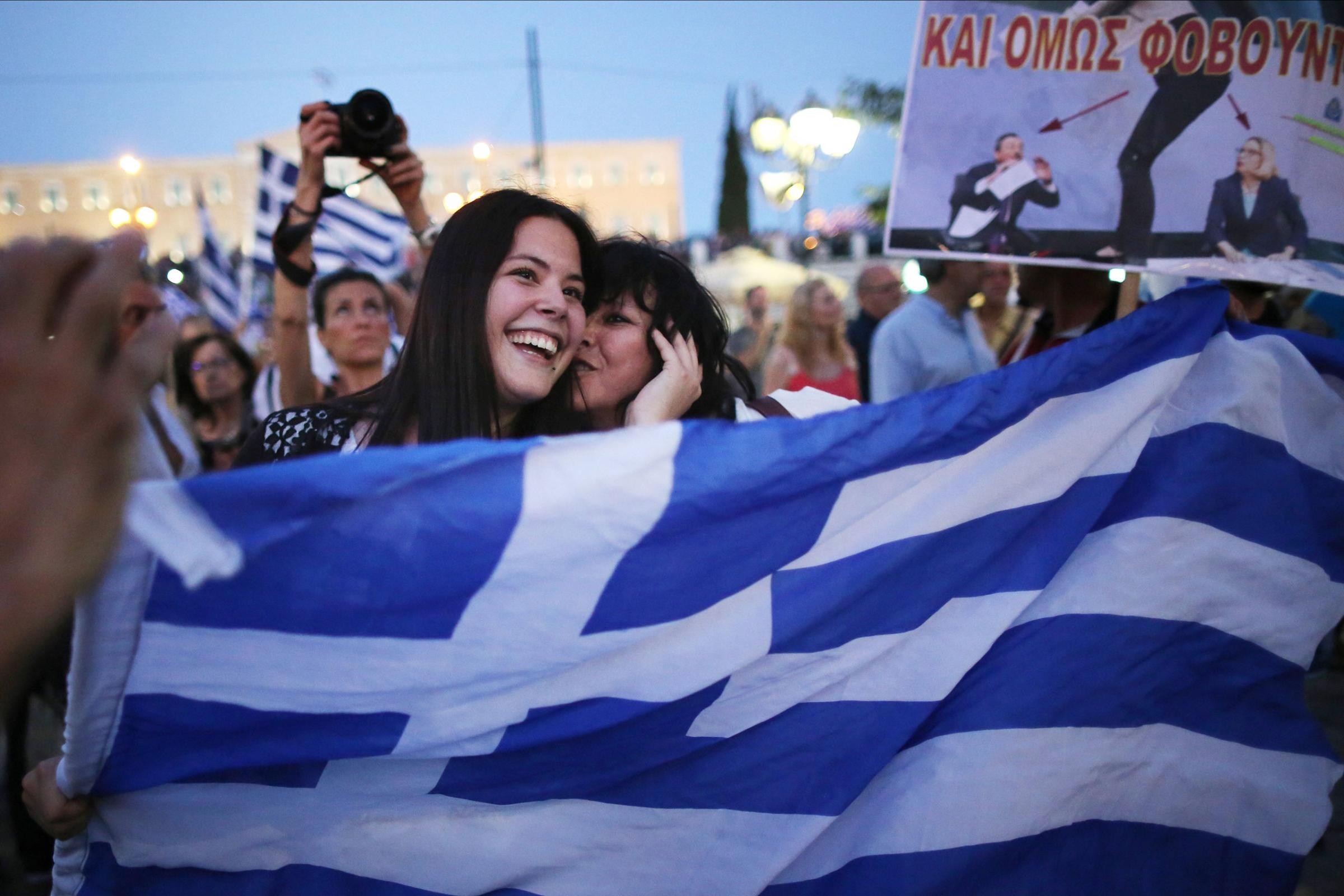
![Supporters of the "No" vote wave Greek flags after the referendum's exit polls at Syntagma square in Athens, Sunday, July 5, 2015.](https://static.time.com/v3/assets/bltea6093859af6183b/blt9233f736dc791cbe/69885998e53aba3bba4de772/greece-referendum001.jpg?branch=production&width=1200&quality=75&auto=webp)

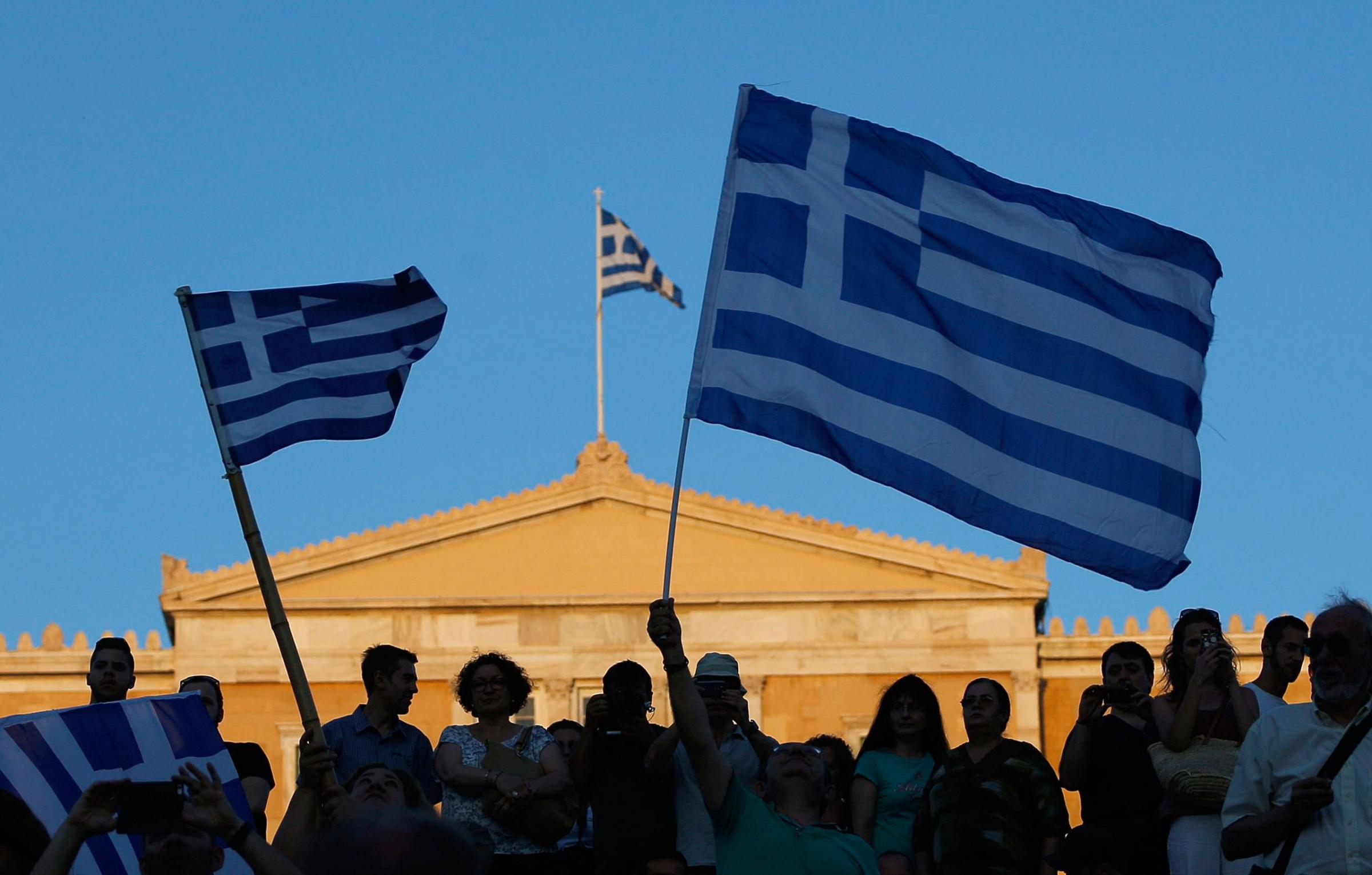
Supporters of the "No" vote wave Greek flags after the referendum's exit polls at Syntagma square in Athens on July 5, 2015. Emilio Morenatti—AP

![People celebrate in front of the Greek parliament as early opinion polls predict a win for "No" campaign, which won with more than 60 percent of the vote.](https://static.time.com/v3/assets/bltea6093859af6183b/bltb3ac8a2a450c9b11/69885999cd6848aac20a0aaa/greece-referendum003.jpg?branch=production&width=1200&quality=75&auto=webp)

People celebrate in front of the Greek parliament as early opinion polls predict a win for the "No" campaign in Athens on July 5, 2015. Christopher Furlong—Getty Images

![Tens of thousands of Greeks came to the city center of Athens to celebrate the victory of the "No" campaign.](https://static.time.com/v3/assets/bltea6093859af6183b/blt1e6e174b5689d20b/698859990b72e3332e6e4cc8/greece-referendum004.jpg?branch=production&width=1200&quality=75&auto=webp)

Tens of thousands of Greeks came to the city center to celebrate the victory of the "No" campaign in Athens on July 5, 2015. Michael Debets—Demotix/Corbis


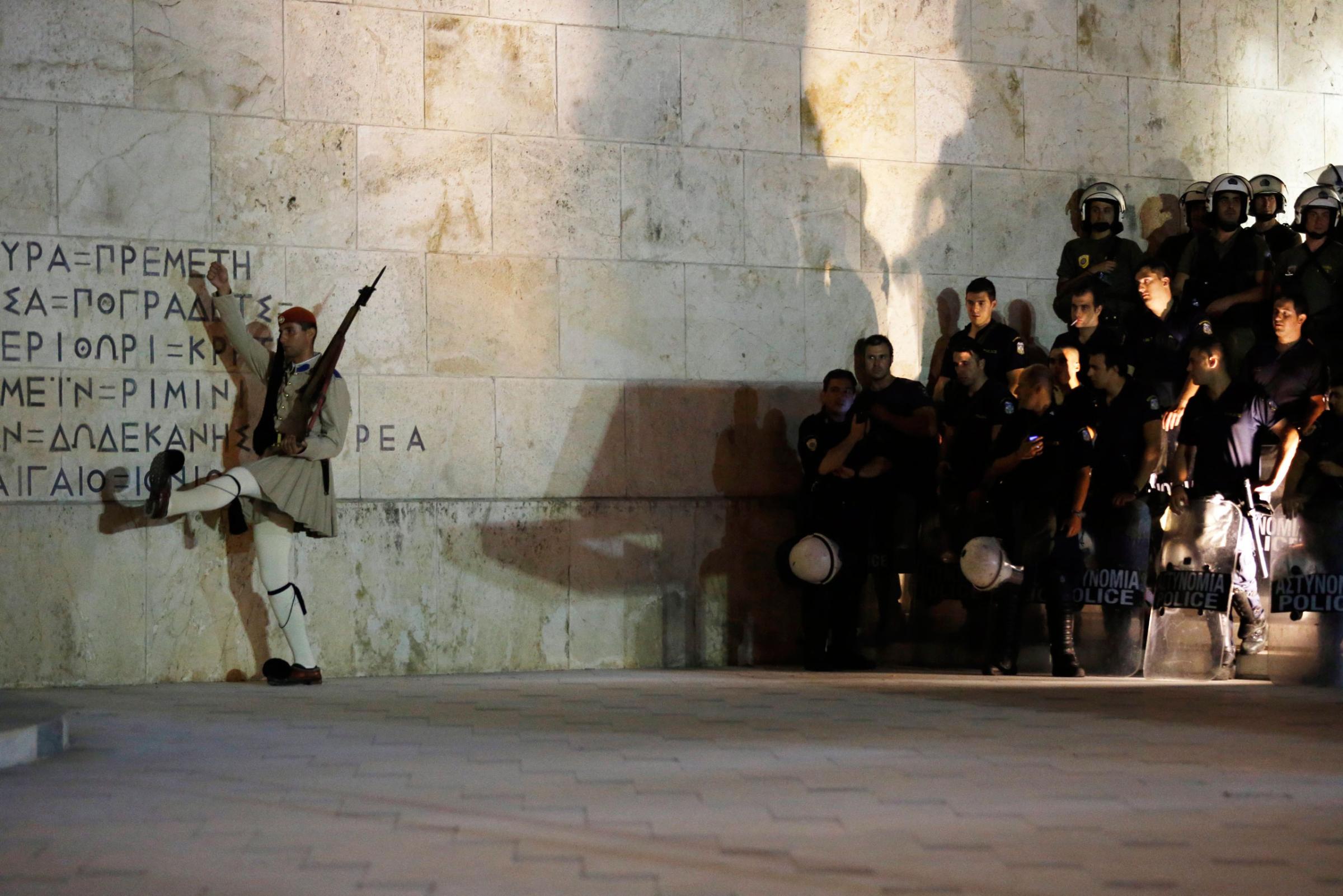
![Greek special forces members guard the Parliament in Syntagma Square after the referendum in Athens.](https://static.time.com/v3/assets/bltea6093859af6183b/blt784c1519eeda8e05/698859998e0601314d461452/greece-referendum002.jpg?branch=production&width=1200&quality=75&auto=webp)

Greek special forces members guard the Parliament in Syntagma Square after the referendum in Athens on July 5, 2015. Armando Babani—EPA

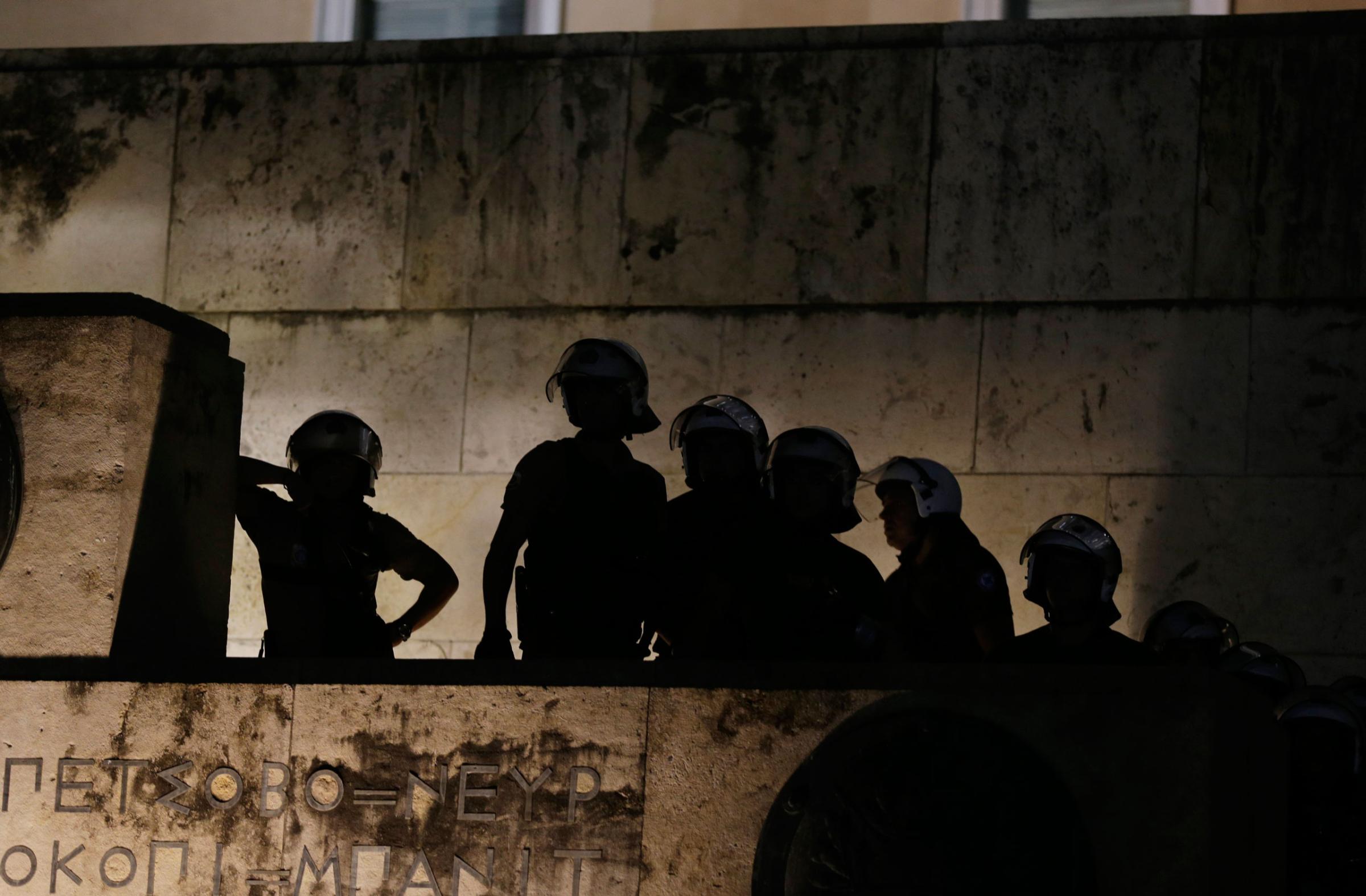
![Riot policemen guard an entrance of the parliament as supporters of the No vote celebrate after the results of the referendum at Syntagma Square.](https://static.time.com/v3/assets/bltea6093859af6183b/bltb7a87d99dd9fd0e2/6988599a5f570f69deb1c4e3/greece-referendum005.jpg?branch=production&width=1200&quality=75&auto=webp)

Riot policemen guard an entrance of the parliament as supporters of the No vote celebrate after the results of the referendum in Athens on July 5, 2015. Petr David Josek—AP

!["No" supporters celebrate the referendum results on a street in central in Athens.](https://static.time.com/v3/assets/bltea6093859af6183b/bltf6797aa5268f5a03/6988599a3c16390c90458b14/greece-referendum006.jpg?branch=production&width=1200&quality=75&auto=webp)

"No" supporters celebrate the referendum results on a street in central in Athens on July 5, 2015. Alexandros Michailidis—Demotix/Corbis


![A masked youth throws a petrol bomb at riot police during minor clashes in central Athens, Greece July 5, 2015. Greeks voted overwhelmingly "No" on Sunday in a historic bailout referendum, partial results showed, defying warnings from across Europe that ](https://static.time.com/v3/assets/bltea6093859af6183b/bltcd46c96c4d18bdea/6988599b3c1639ab2c458b18/greece-referendum008.jpg?branch=production&width=1200&quality=75&auto=webp)

A masked youth throws a petrol bomb at riot police during minor clashes in central Athens on July 5, 2015. Marko Djurica—Reuters

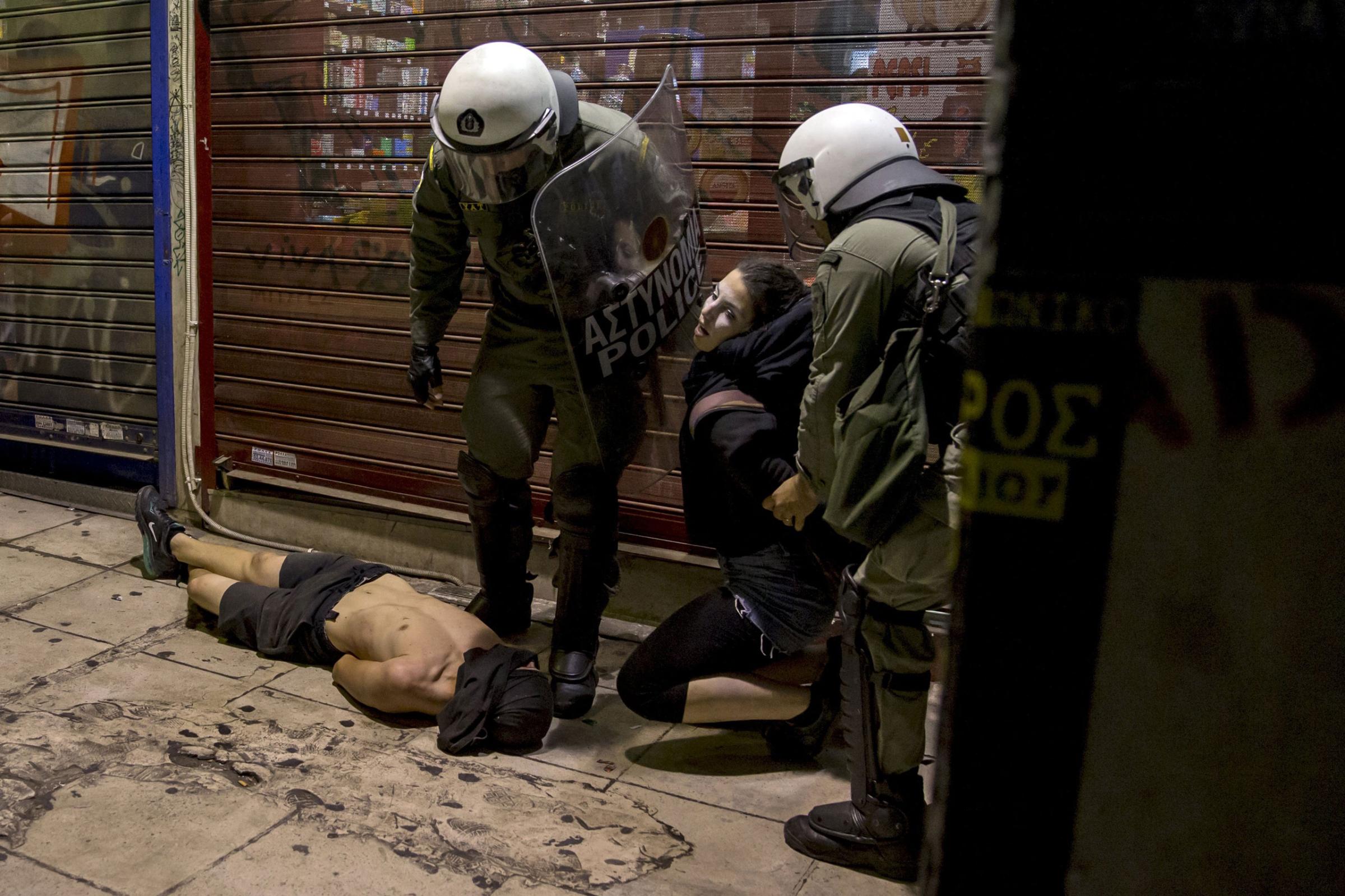
![Riot police detain masked youth during minor clashes in central Athens, Greece early July 6, 2015.](https://static.time.com/v3/assets/bltea6093859af6183b/blt74d1f52065972509/6988599a5f570f85f7b1c4e7/greece-referendum007.jpg?branch=production&width=1200&quality=75&auto=webp)

Riot police detaining masked youth during minor clashes in central Athens on July 6, 2015. Marko Djurica—Reuters

```json
[{"@context":"https://schema.org","@type":"OpinionNewsArticle","@id":"https://time.com/3955496/greece-needs-investors/","mainEntityOfPage":{"@type":"WebPage","@id":"https://time.com/3955496/greece-needs-investors/"},"headline":"Greece Doesn’t Need a Bailout—It Needs Investors","datePublished":"2015-07-13T15:20:09.000Z","dateModified":"2026-05-11T05:02:31.700Z","description":"The global financial system needs to look beyond loans if it wants to avoid future train wrecks when financing growing nations","url":"https://time.com/3955496/greece-needs-investors/","keywords":["world affairs","Economy","Money","europe","Greece","finance"],"thumbnailUrl":"https://static.time.com/v3/assets/bltea6093859af6183b/bltd44078988f58c22a/69885aa22dce015aa59e498d/greek-flag-air.jpg?branch=production&width=1200&quality=75&auto=webp&crop=1200:675&height=675","author":[{"@type":"Person","name":"Bhagwan Chowdhry / Zocalo Public Square"}],"articleSection":"Ideas","image":[{"@type":"ImageObject","url":"https://static.time.com/v3/assets/bltea6093859af6183b/bltd44078988f58c22a/69885aa22dce015aa59e498d/greek-flag-air.jpg?branch=production&width=1200&quality=75&auto=webp&crop=1200:675&height=675","width":1200,"height":675,"headline":"The Greek flag flies in the wind at the Acropolois in Athens on July 4, 2015.","caption":"The Greek flag flies in the wind at the Acropolois in Athens on July 4, 2015.","creditText":"Kay Nietfeld—picture-alliance/dpa/AP","representativeOfPage":true}],"publisher":{"@type":"Organization","name":"Time","url":"https://time.com/","logo":{"@type":"ImageObject","url":"https://time.com/images/logo.png","width":528,"height":156},"foundingDate":"March 3, 1923","sameAs":["https://www.facebook.com/time","https://www.instagram.com/time/?hl=en","https://twitter.com/time","https://www.pinterest.com/timemagazine"]}},{"@context":"https://schema.org","@type":"BreadcrumbList","itemListElement":[{"@type":"ListItem","position":1,"item":{"@id":"/section/ideas/","name":"Ideas"}},{"@type":"ListItem","position":2,"item":{"@id":"/tag/world-affairs/","name":"world affairs"}},{"@type":"ListItem","position":3,"item":{"@id":"https://time.com/3955496/greece-needs-investors/","name":"Greece Doesn’t Need a Bailout—It Needs Investors"}}]}]
```